Enhancing End-to-End Usability for Contester.life’s Web Platform
2024
Contester.Life
4 minute-read
UX/UI
Website
Role
UX/UI Designer
Timeline
3 months
BACKGROUND
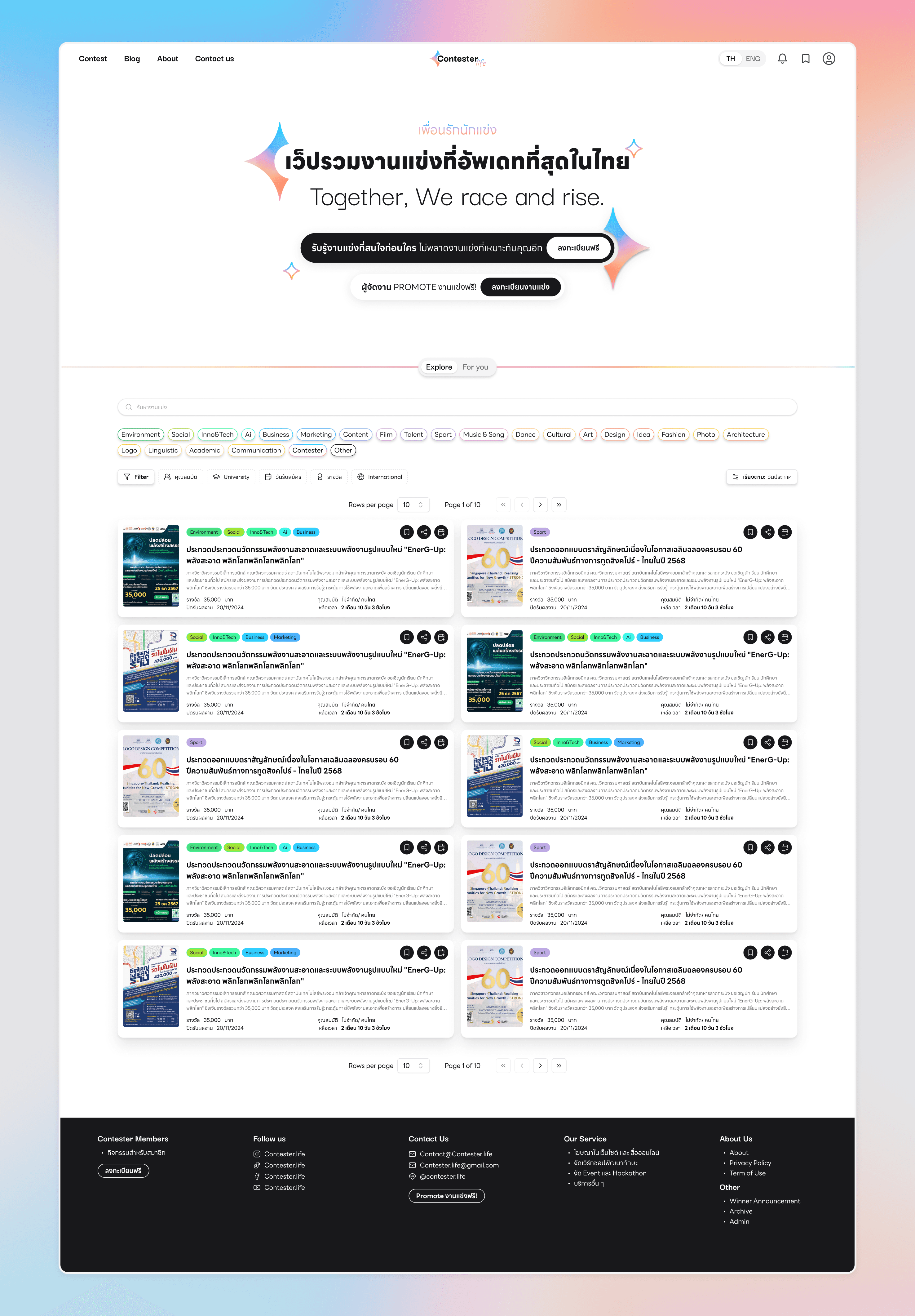
Contester.Life is a web platform that brings competitions, hackathons, and student programs together in one place.
Users can discover the right opportunities through a personalized feed, smart filters, and helpful notifications based on their interests and potential. The system also has built-in tools to support contest organizers, making it easier to run competitions and help more people access the right opportunities at the right time.
The Challenge
How can we help students discover opportunities that match their interests?
Personalize the contest browsing experience for students
Help contest organizers reach their target participants
The Solution
Built for On-the-Go and Deep Browsing
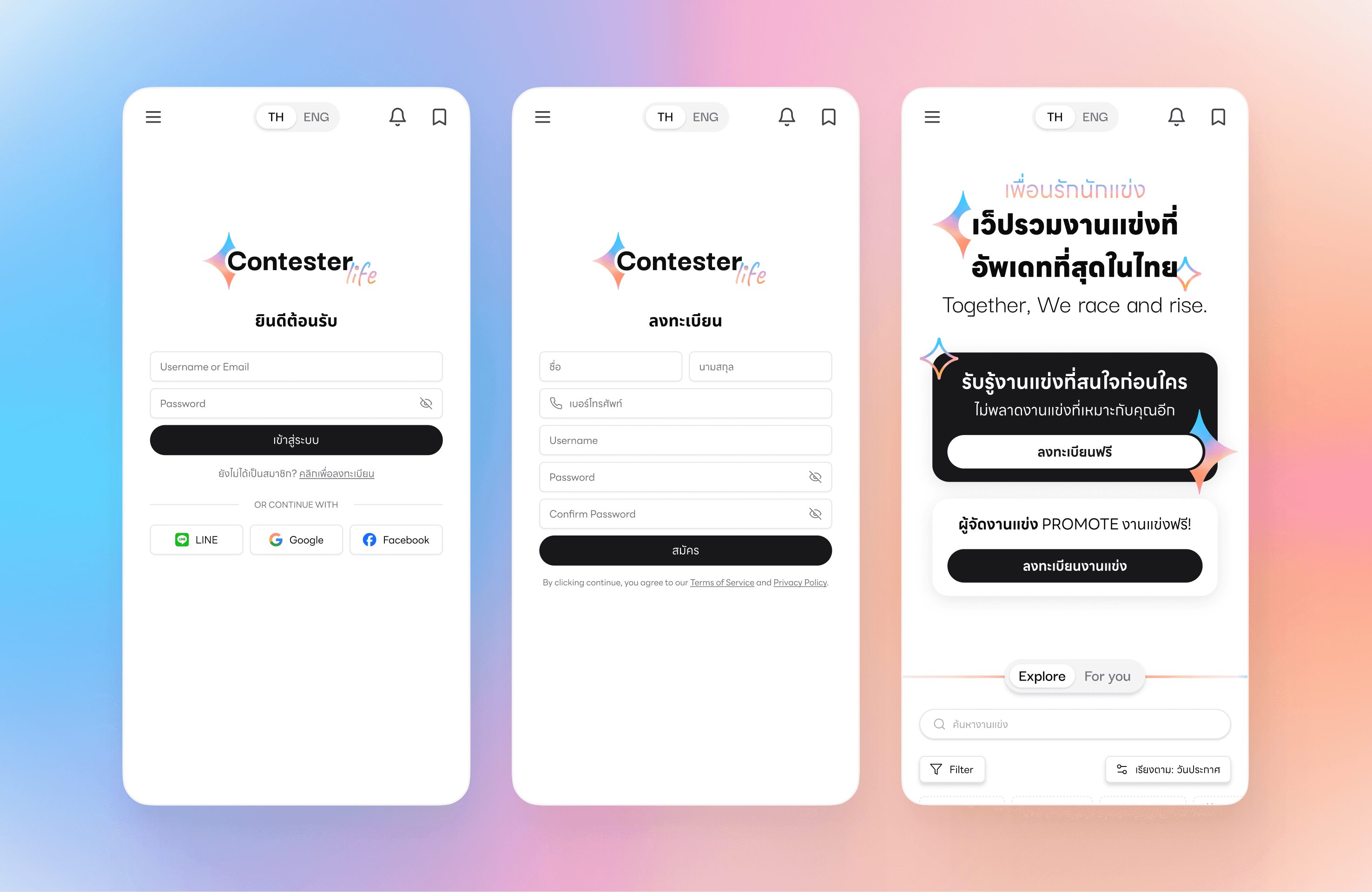
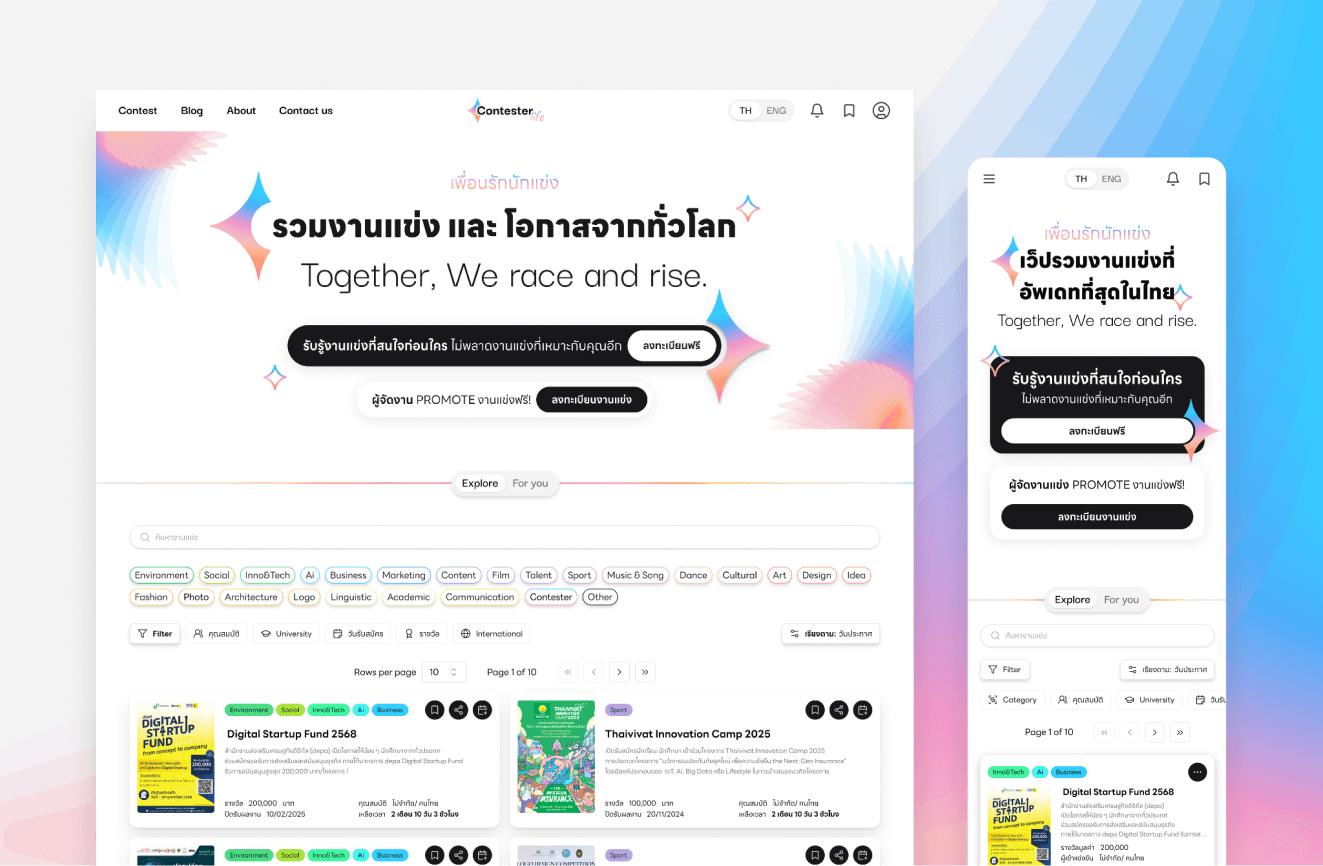
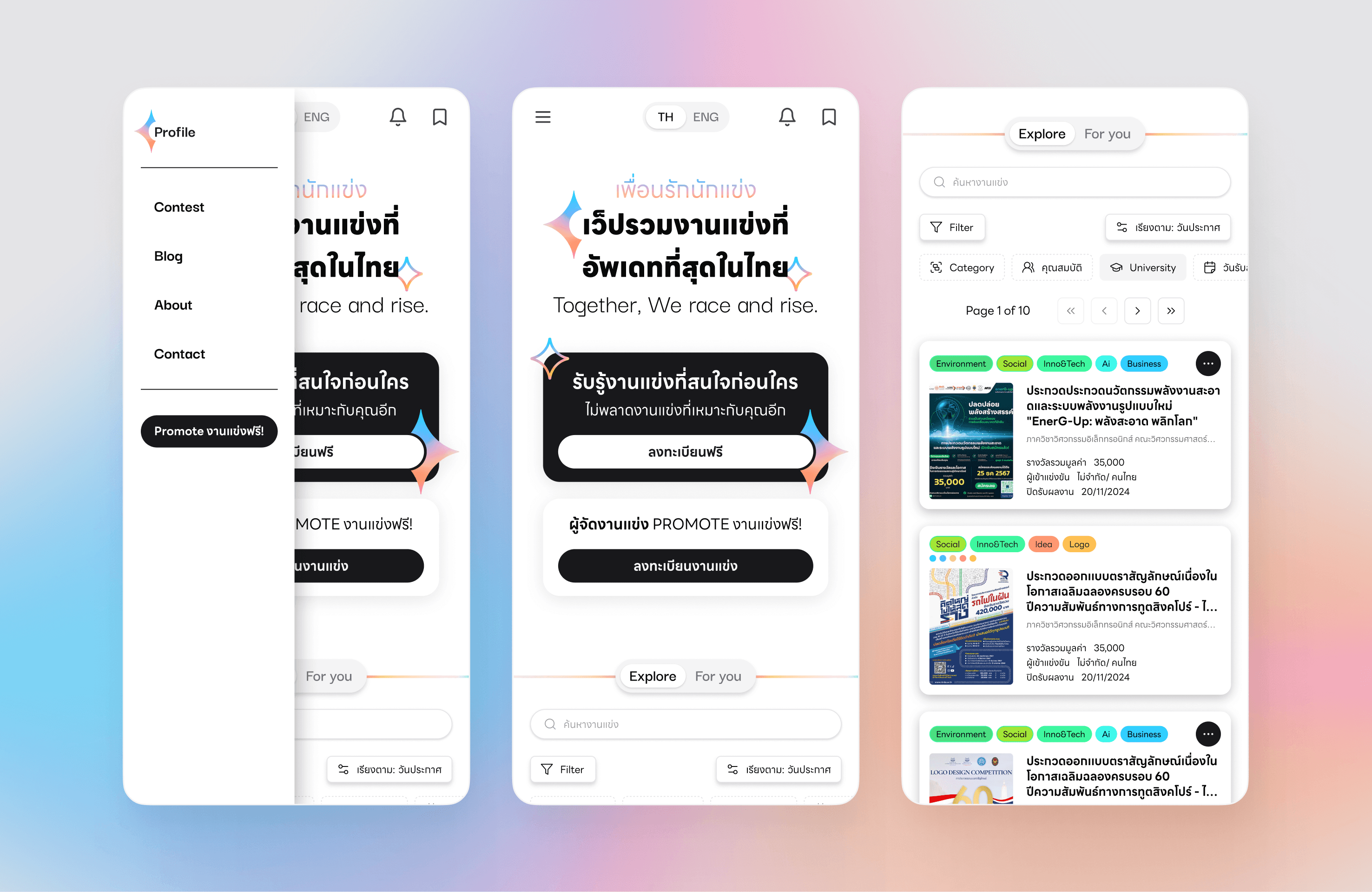
We designed a cross-device experience that supports both fast finds and focused searches. With a mobile-first approach and responsive design, the platform stays accessible across devices and optimized for all screens.
Smart Contest Discovery
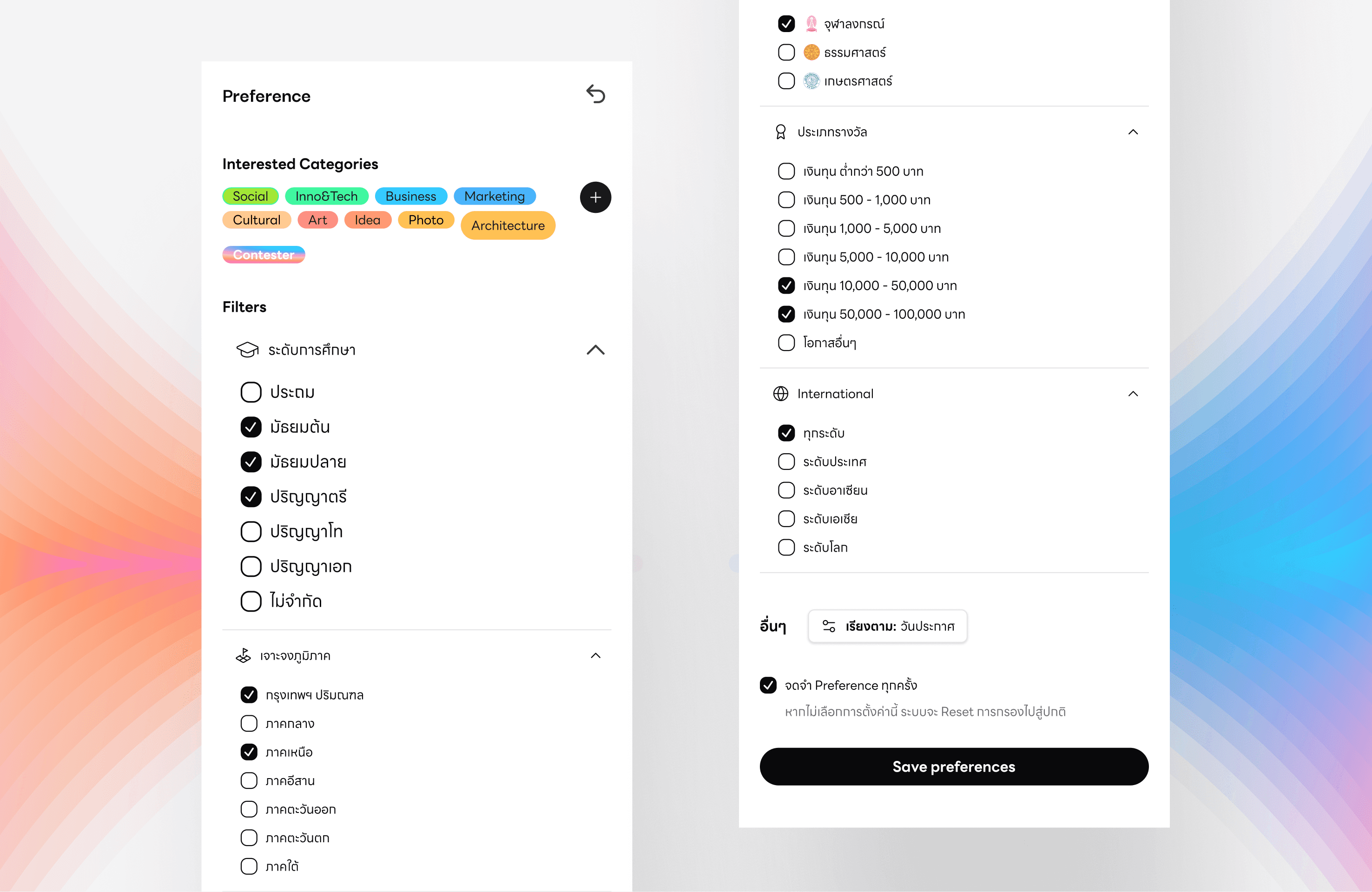
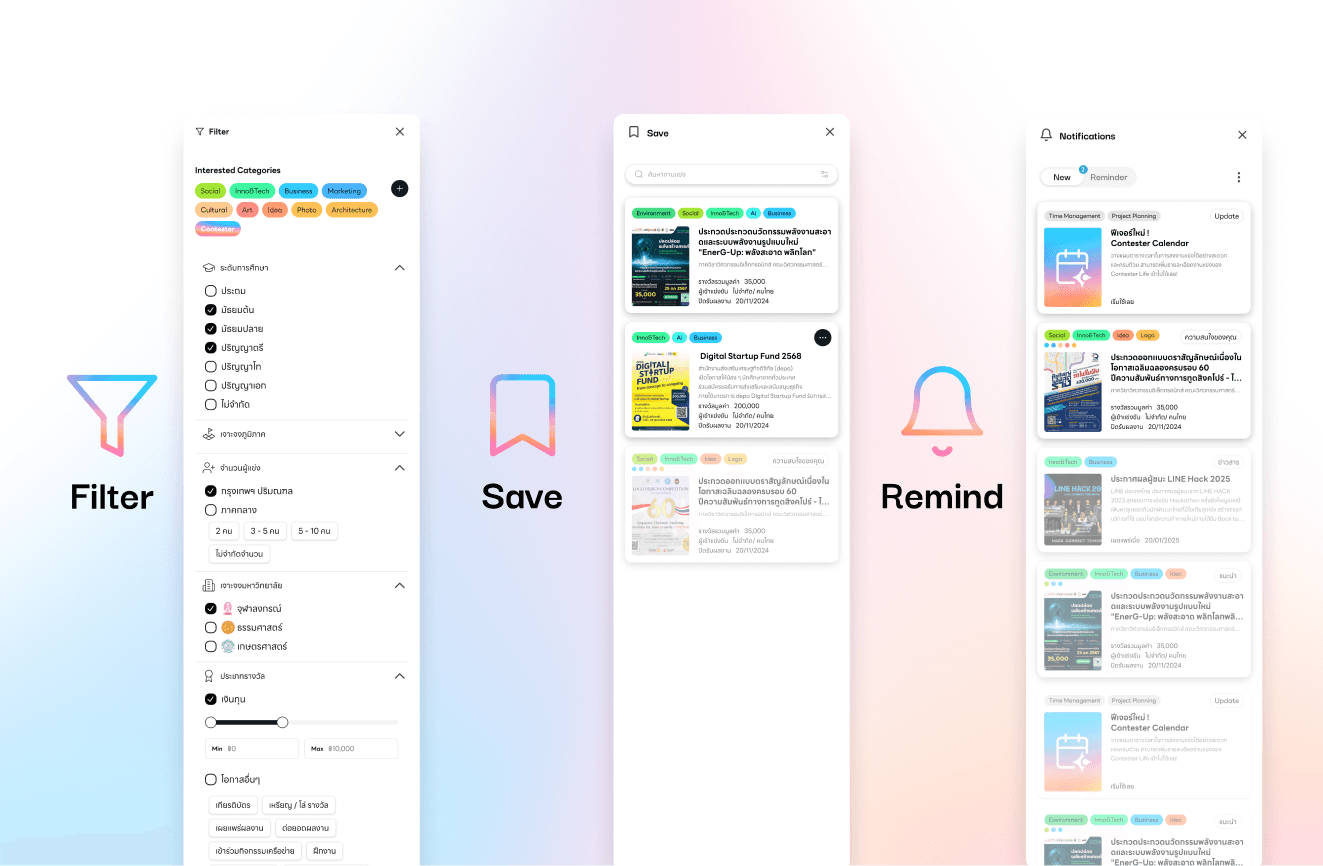
Filter contests by level of education, location, solo or group, university and prize. Save the opportunities you’re interested in. Stay notified about new contests that match your interest and receive reminders about saved contests
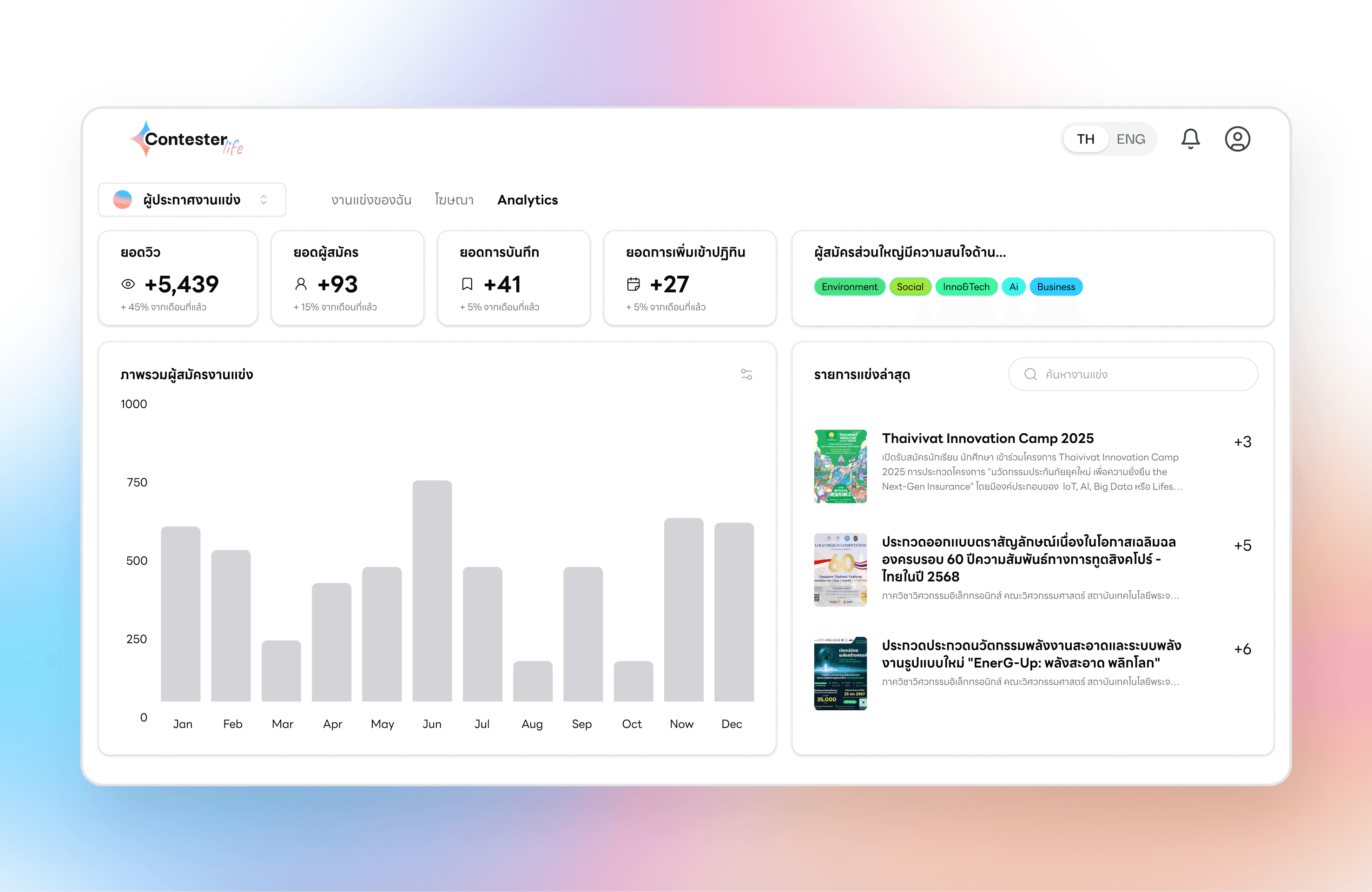
Easily Manage Contests with Admin Tools
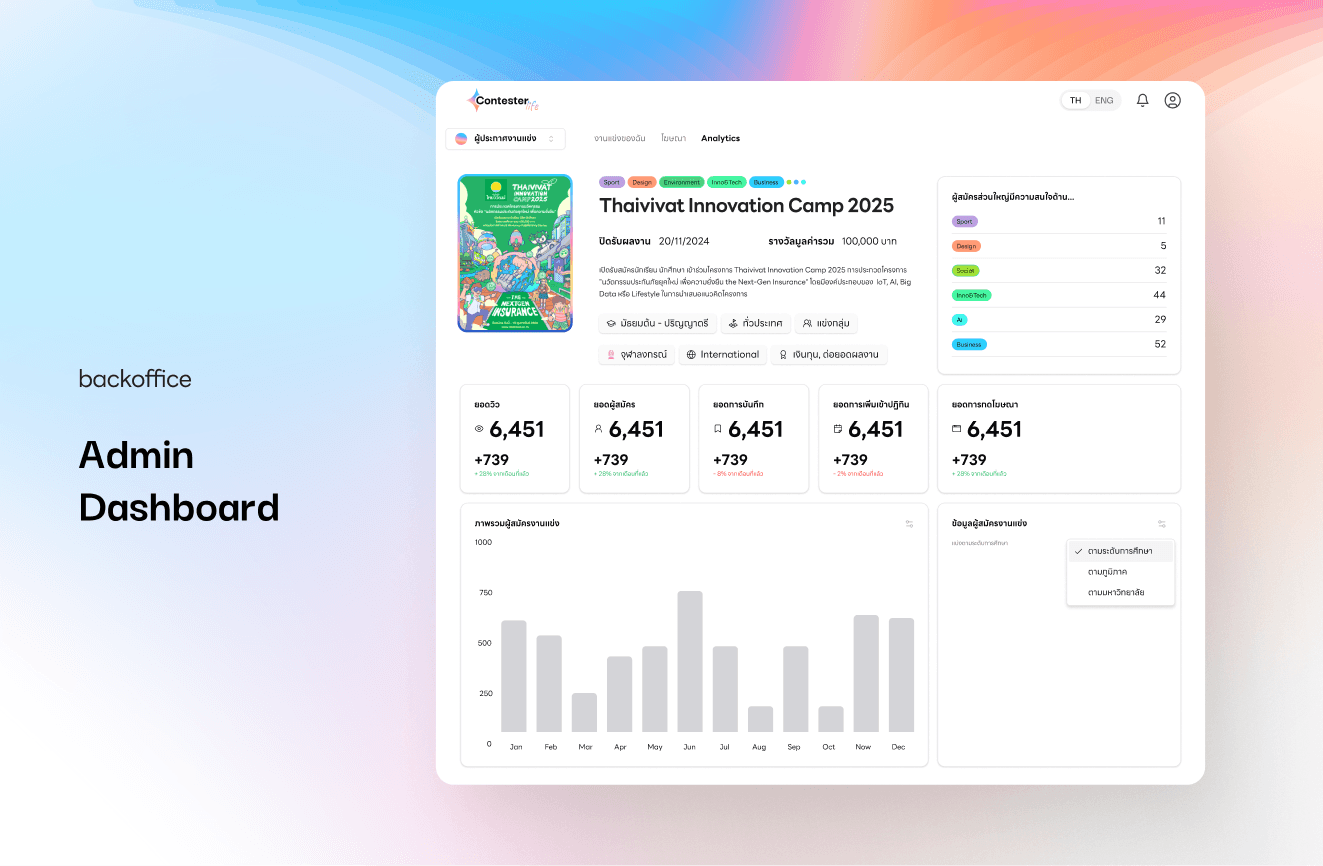
We designed a dedicated backoffice to help contest organizers run competitions more efficiently with less effort. Clear dashboards and performance analytics give instant visibility into how each contest is doing
design approach
We designed Contester as a two-sided platform for both students and organizers. By studying how people naturally search, compare and manage contest listings, we shaped the experience to help students find the right contests faster and help organizers to reach the right audience.
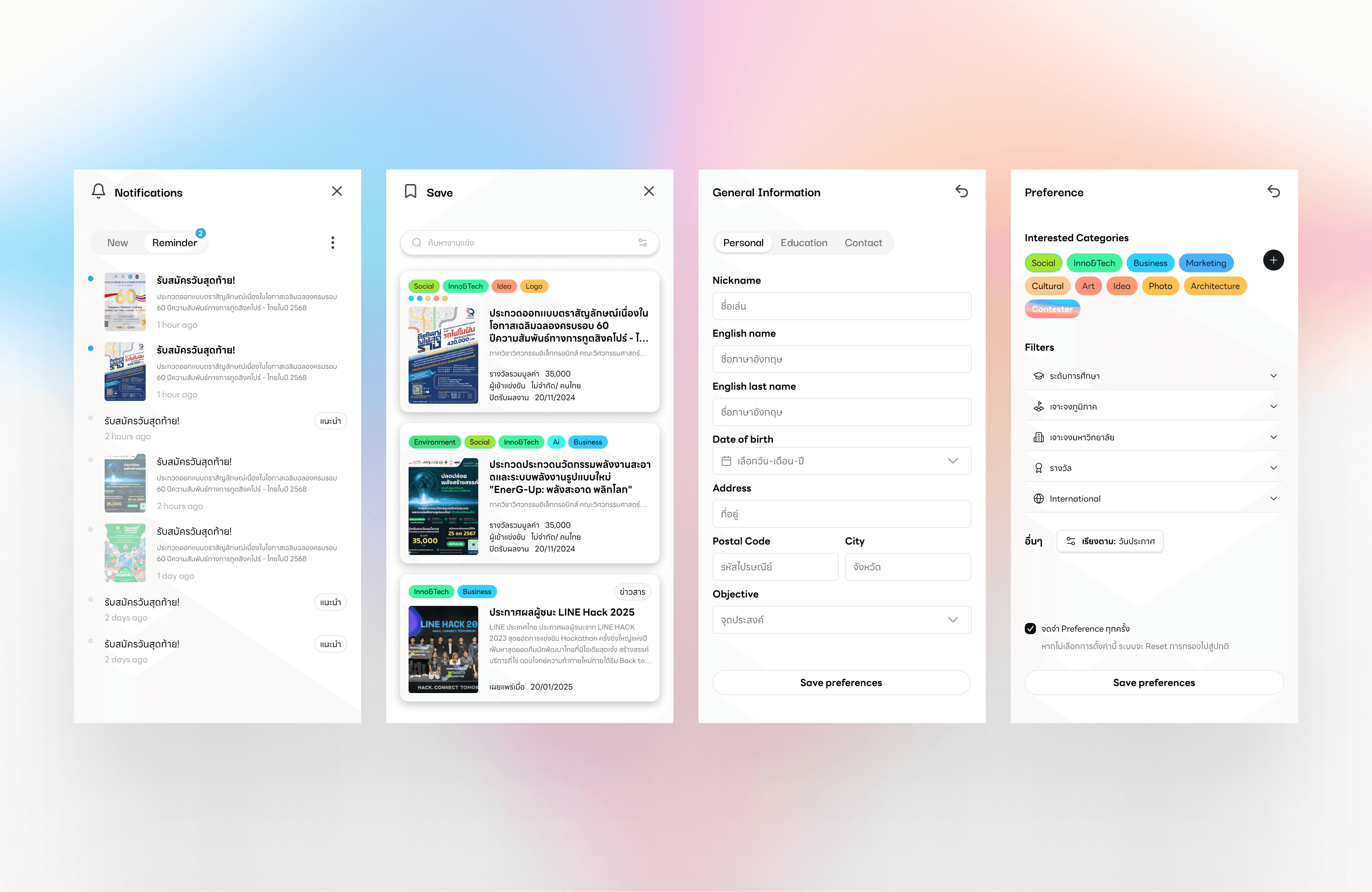
For students, we focused on:
Personalized feeds and smart filters to surface relevant opportunities
Save and notification features to support decision-making over time
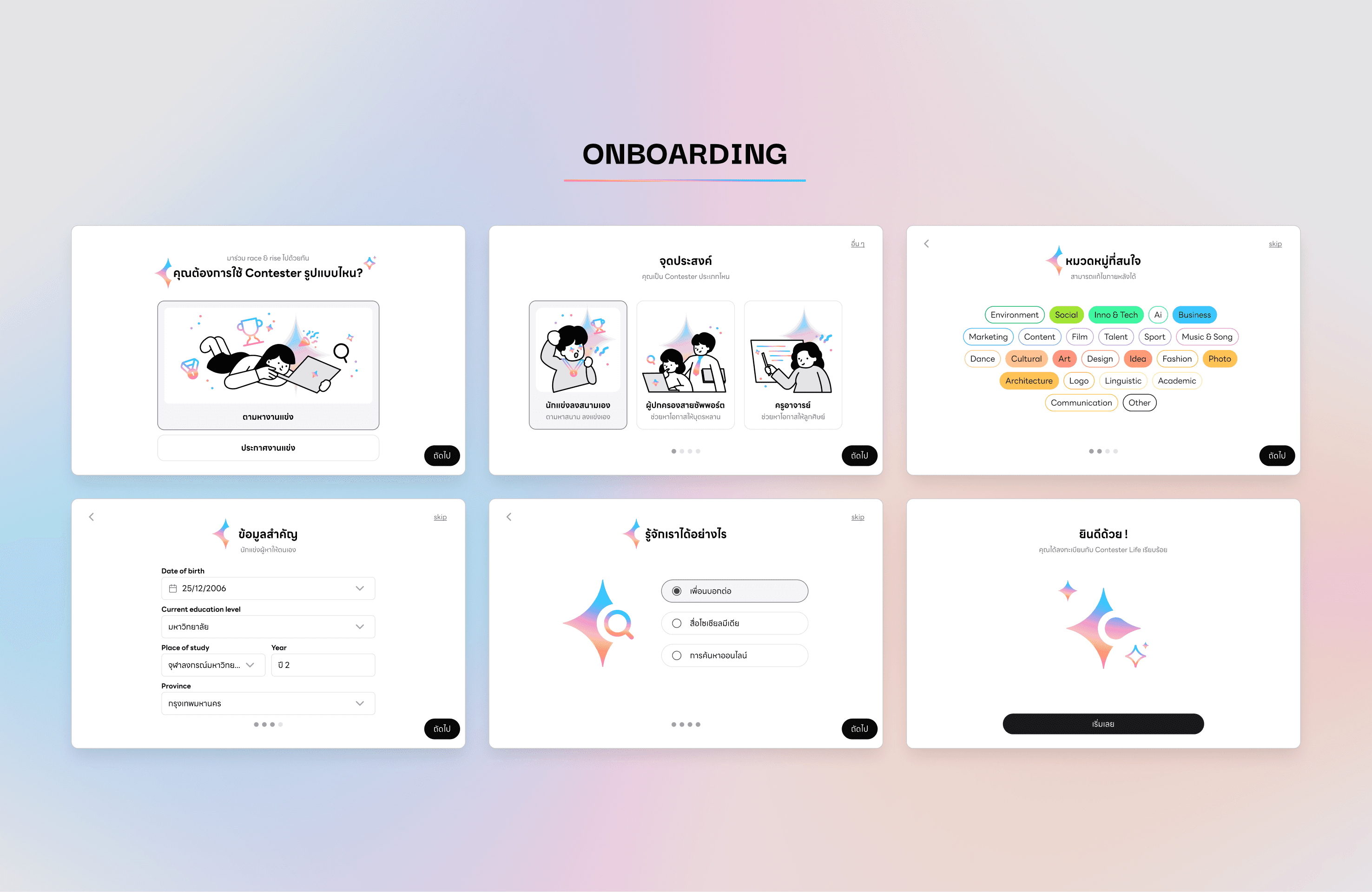
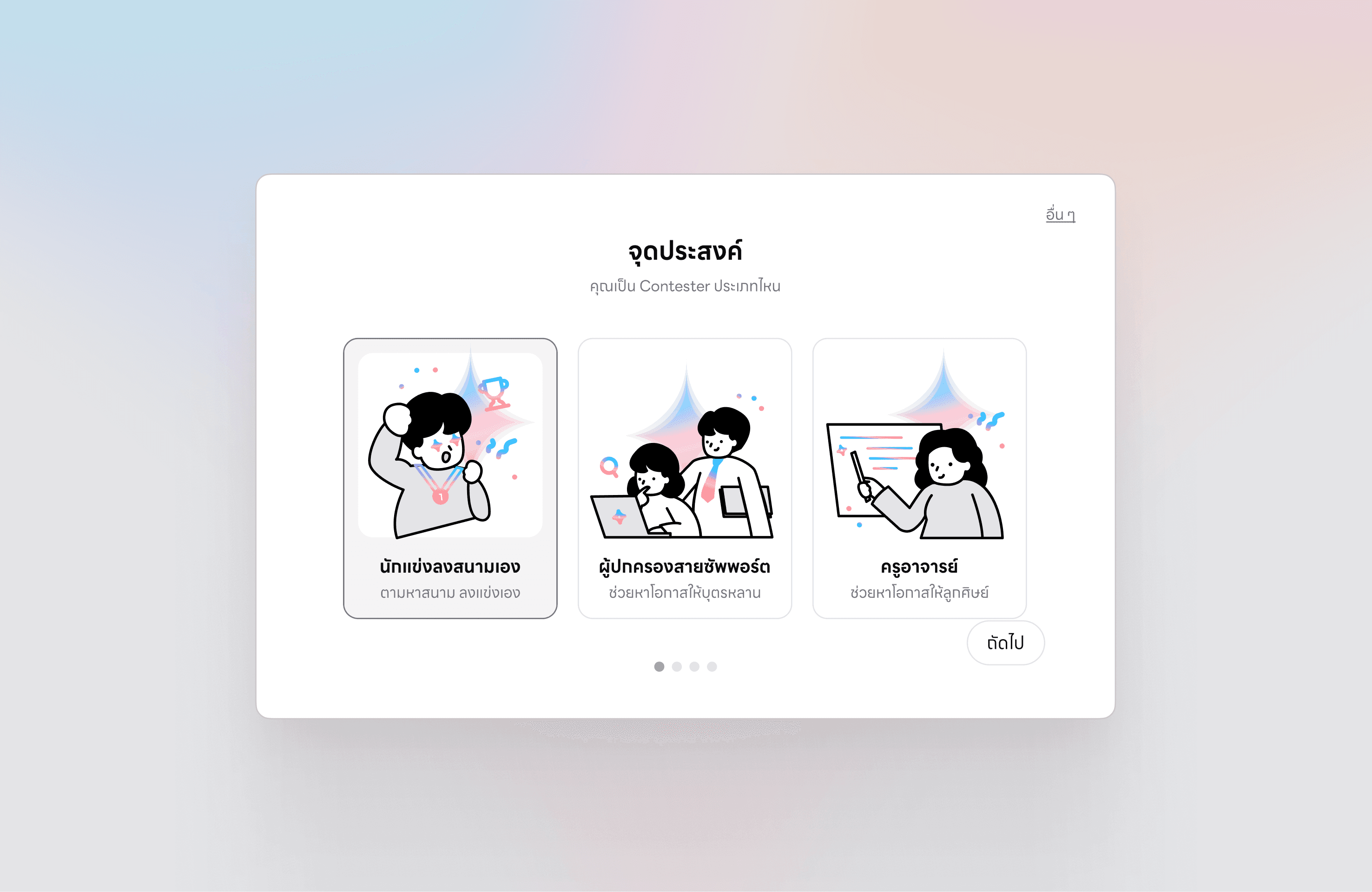
Onboarding experience to quickly understand user’s interests and goals
Profile, preferences and settings to let users fine-tune to match their needs
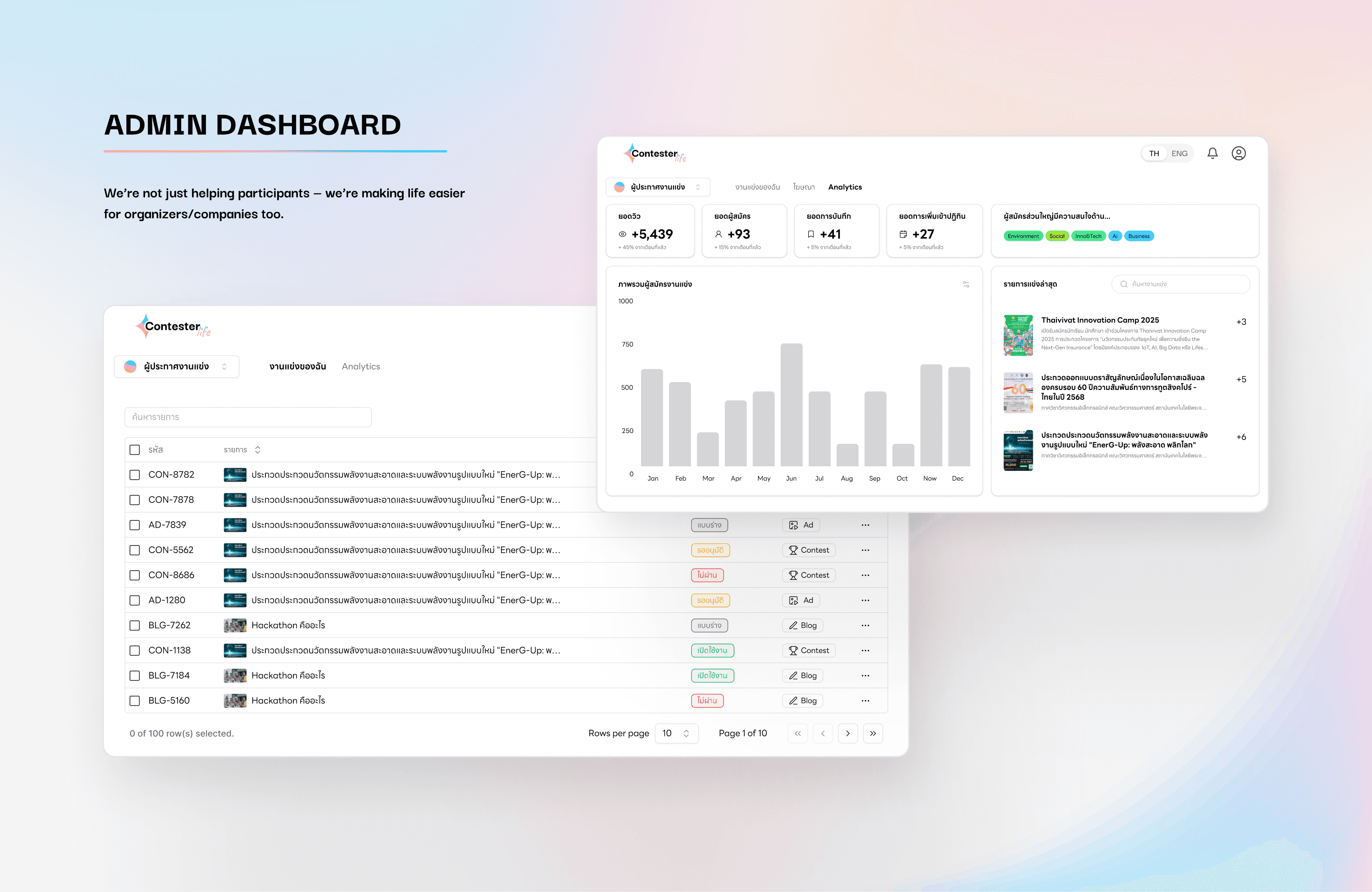
For organizers, we focused on:
One-click registration and saved user profiles to make setup and participation effortless
Analytics dashboard that shows reach and performance at a glance
Smart targeting that notifies the right audience, no need to chase applicants
Built-in email tools for confirmations, reminders, and announcements, reducing manual follow-ups
design decisions
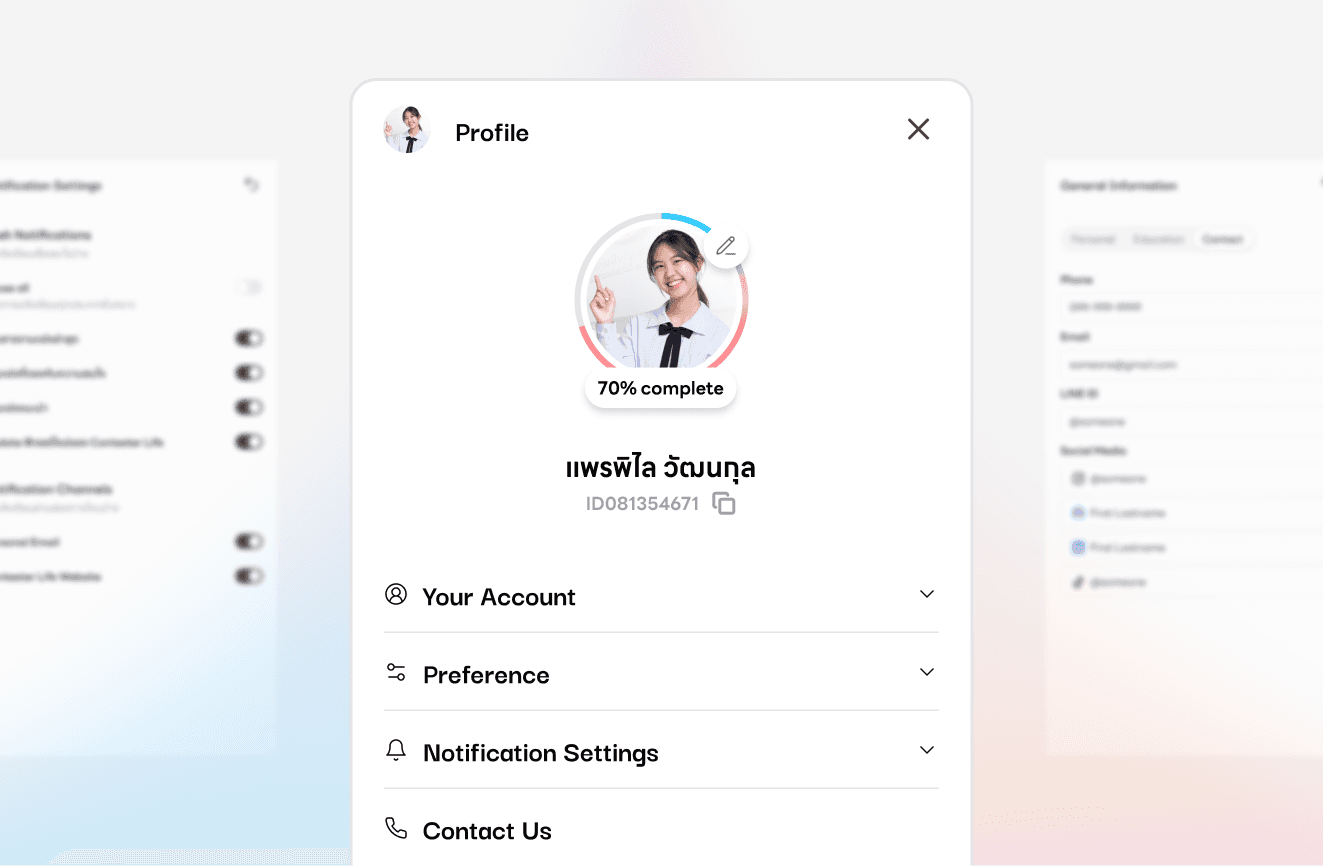
Profile Progress
Personalizing the feed requires users to share a fair amount of profile and preference information, which can feel draining. To ease this, we introduced a progress bar for the profile settings section. The visible sense of completion acts as an incentive, helping users move through setup while feeling motivated.
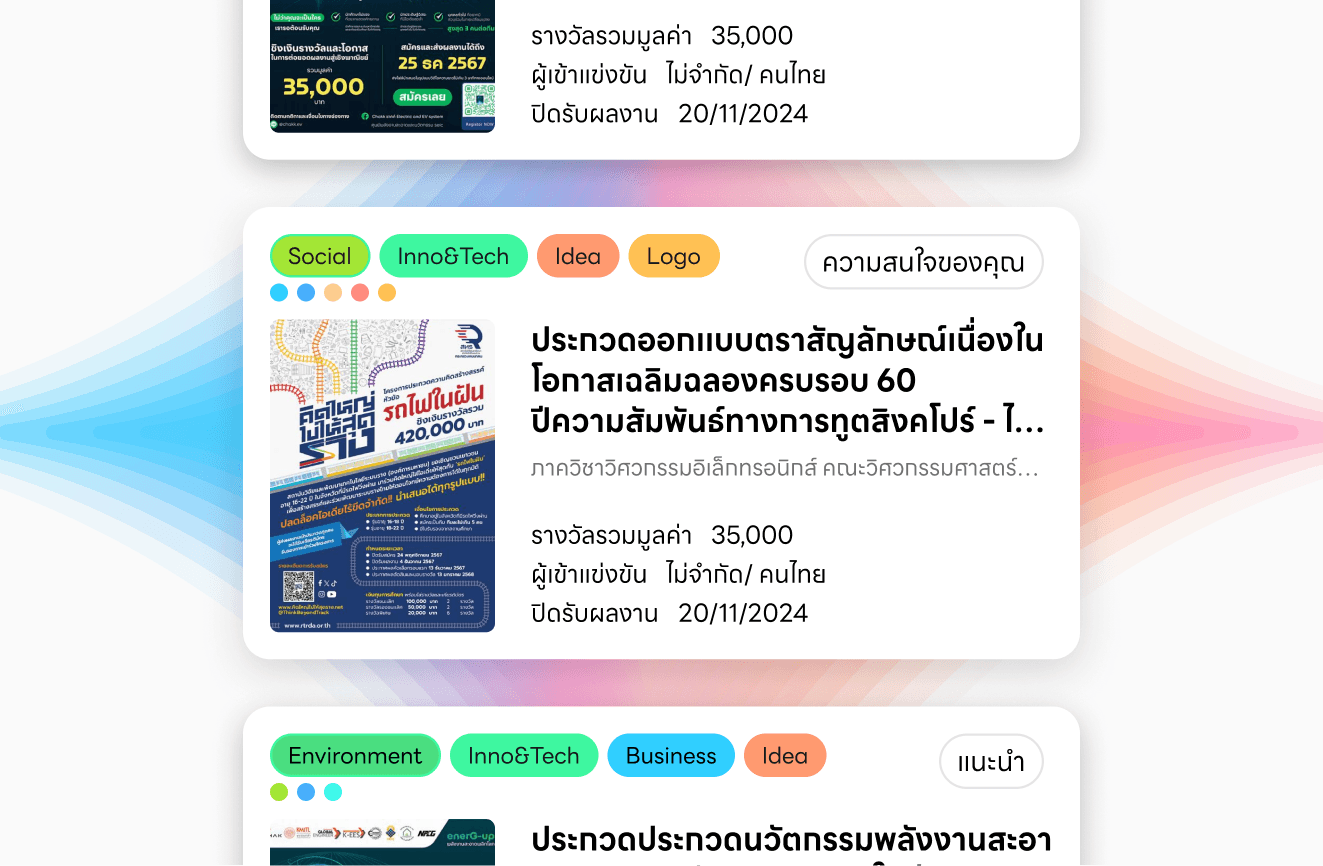
Abbreviating Category Tags
Contest listings often belong to multiple categories, but having too many tags can be visually distracting. To keep cards easy to scan, I designed a component system that abbreviates category tags when they exceed a single row. Extra tags collapse into colored dots, preserving category context. This approach is then applied to the rest of the design system to keep components clean and consistent.
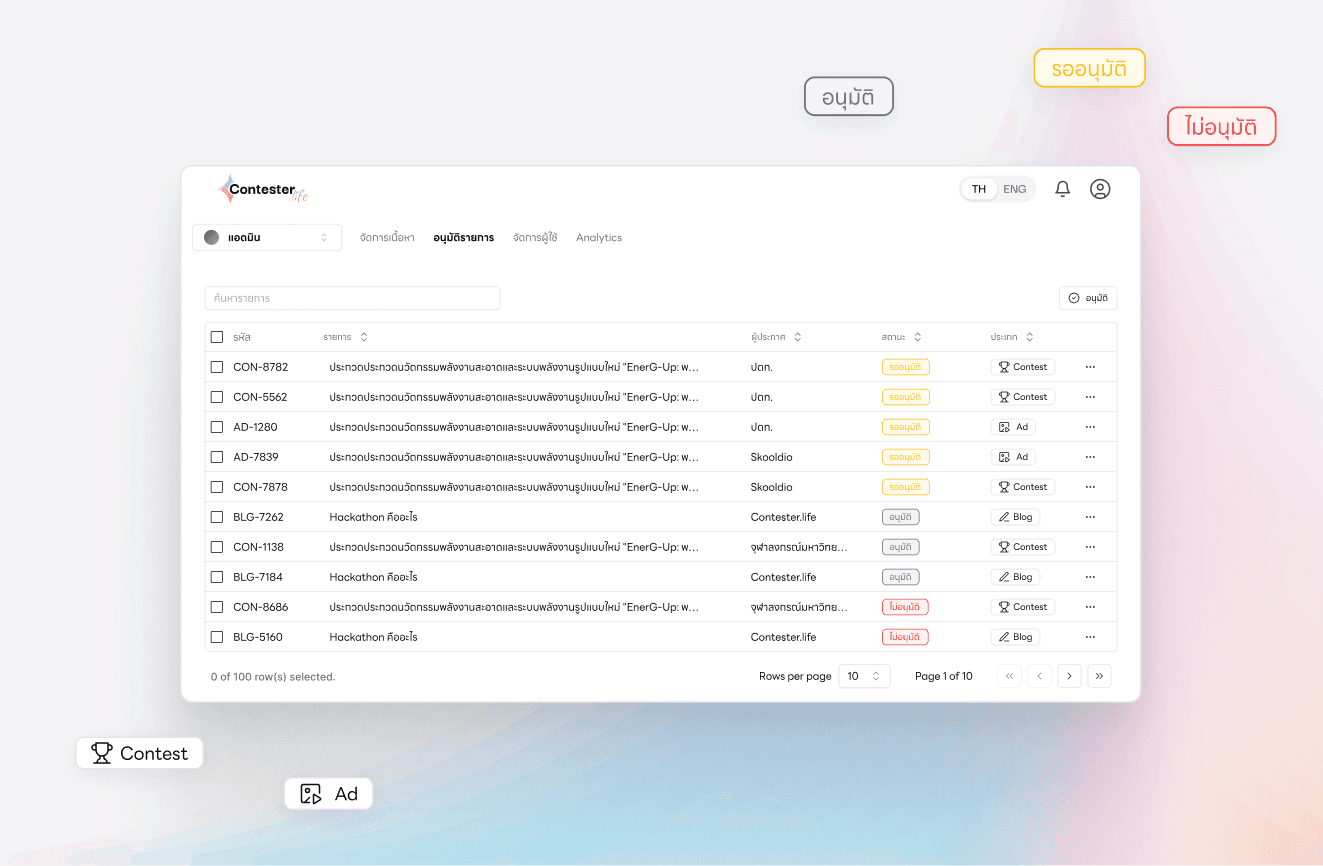
Fast Contest Approval
Each contest listing needs to be approved before going live. To reduce task time for Contester admins, I introduced a streamlined workflow in the backoffice. Instead of reviewing submissions one by one, admins get a dashboard view that highlights all content at a glance. They can see what’s new, what needs attention, and what’s ready to publish. This makes decisions faster, reduces manual effort and helps contests reach users sooner.
outcome
In the end, Contester makes finding and running opportunities feel simpler. Students can discover contests that match their interests, stay on track with reminders and feel confident they’re not missing out. Organizers spend less time managing logistics and more time reaching the right participants. By designing around real user needs on both sides, the experience becomes smoother and more rewarding for everyone involved.